

 Tiếng Việt
An XM rebate calculator determines the exact cashback amount earned from XM trading volume by converting lots or pips into a share of the IB commission paid back to the trader. The tool applies the rebate rate agreed with the provider directly to the closed trading volume, removing manual estimation.
Cashback rates on XM vary between rebate providers, and this variation depends on the percentage of IB commission each provider shares back. Comparing these rates before registering an IB account directly affects the final rebate value per lot traded.
The true trading cost on XM is calculated as spread cost plus commission fee minus the rebate amount received per trade. This calculation shows the net expense after cashback, which differs from the raw spread or commission quoted by the broker.
Rebate amounts per lot are not fixed across all instruments since forex pairs, gold, silver, and oil each carry their own commission structure. Understanding this breakdown clarifies why cashback on metals or energy often differs from standard currency pairs. The section below, provided through Rebate FX, explains what an XM rebate calculator is and how each of these figures gets computed.
Contents:
What Is an XM Rebate Calculator?
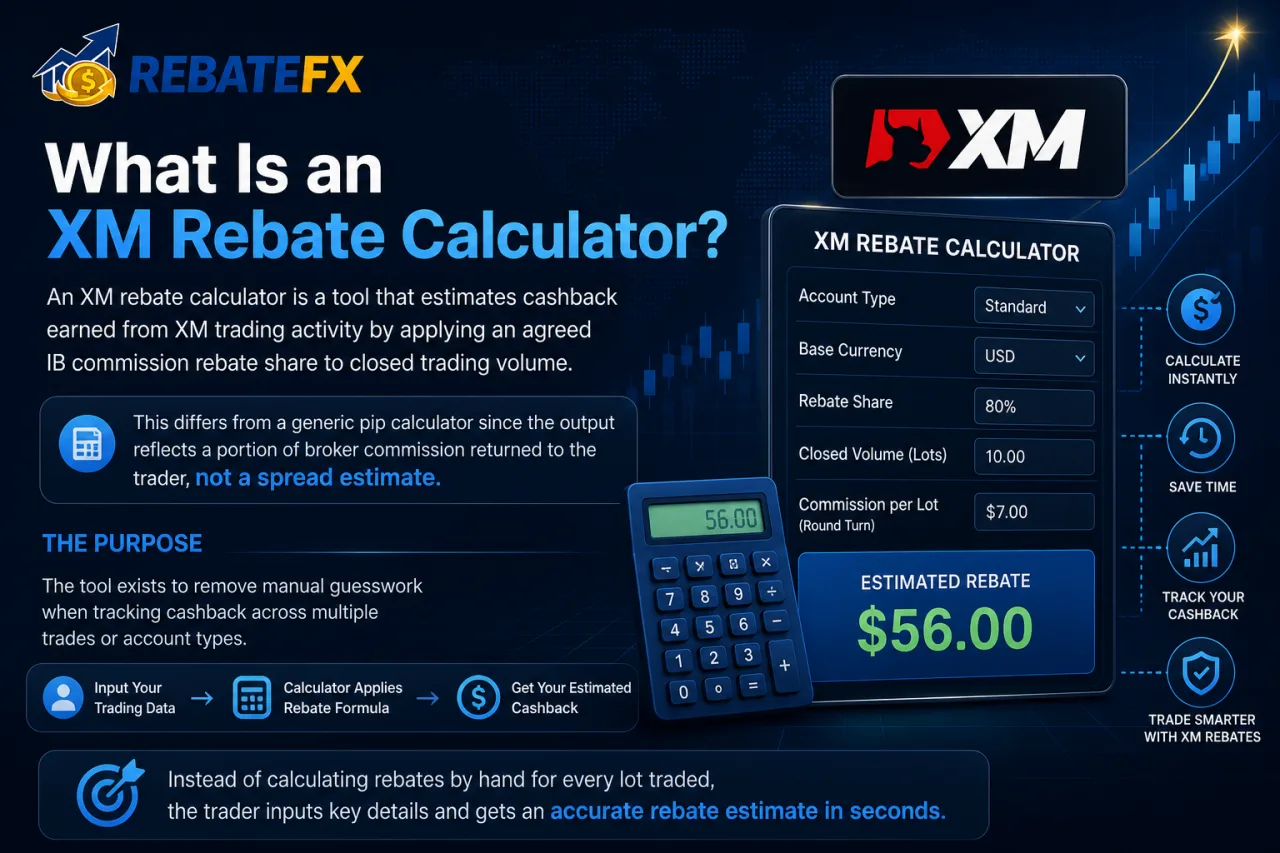
An XM rebate calculator is a tool that estimates cashback earned from XM trading activity by applying an agreed IB commission rebate share to closed trading volume. This differs from a generic pip calculator since the output reflects a portion of broker commission returned to the trader, not a spread estimate.
The tool exists to remove manual guesswork when tracking cashback across multiple trades or account types. Instead of calculating rebates by hand for every lot traded, the trader inputs lot size, instrument, and rebate rate to get an instant cashback figure.
Rebate providers set their own share of the IB commission before this calculation applies. Rebate providers, for example, offer a share of the IB commission back to XM traders, with the exact percentage varying by provider.
This tool serves active traders who place frequent or high-volume trades on XM, since consistent volume compounds the rebate value over time. Scalpers, day traders, and account managers handling multiple lots benefit most from tracking exact cashback rather than estimating it manually. Casual or low-frequency traders still use it to confirm expected rebate amounts before choosing an IB program.
How to Use the XM Rebate Calculator to Estimate Your Cashback?
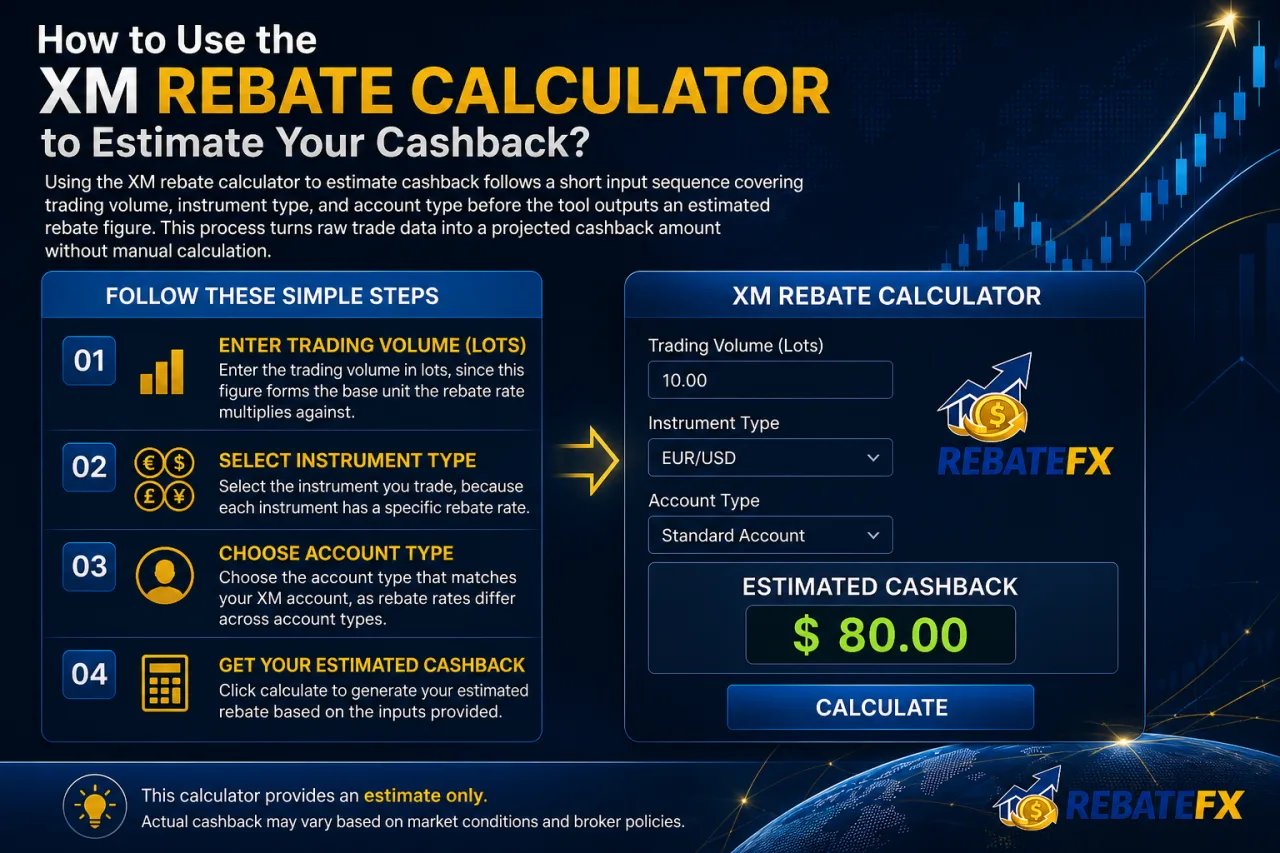
Use the XM rebate calculator by entering trading volume, instrument type, and account type to get an estimated rebate. This process turns raw trade data into a projected cashback amount without manual calculation.
The steps below outline how the calculator processes each input to reach that estimate.
- Enter the trading volume in lots, since this figure forms the base unit the rebate rate multiplies against.
- Select the instrument type, such as forex pairs, gold, silver, or oil, because each carries a different commission structure that changes the rebate output.
- Input the account type, since XM account types tied to different IB commission structures produce different rebate calculations for the same lot size.
- View the estimated rebate output, which displays the projected cashback based on the rebate rate applied to the entered volume and instrument.
Traders running multiple account types cross-check this output against actual closed trade statements to confirm the estimate matches the credited rebate. Account managers handling several instruments also repeat this process per product, since mixing forex and metals volume in a single input produces an inaccurate blended estimate rather than a per-instrument figure.
What Is the Formula Used to Calculate XM Rebate Amounts?
The formula used to calculate XM rebate amounts is Rebate = IB Commission Actually Received by Rebate Provider x Rebate Rate. This calculation ties the payout directly to commission the rebate provider collects from XM, not to any figure the trader sees on a trade confirmation.
This formula addresses the core question of how XM rebate amounts get derived from raw trading activity. The IB commission actually received forms the base variable, since XM pays this commission to the rebate provider based on closed trading volume across the account. The rebate rate then applies as a fixed percentage share of that commission, agreed between the provider and the trader before any trading occurs.
This calculation bases itself on actual IB commission received by the provider, not on spread or commission the trader pays directly. Spread cost and any commission fee charged to the trader remain separate from this formula. Those figures represent trading cost, distinct from the commission base used for cashback.
A practical example clarifies the output: 100 USD IB commission multiplied by an 80% rebate rate produces 80 USD in rebate. Changing either variable, whether the commission volume or the agreed rate, shifts the final payout proportionally.
Which Data Do You Need to Input Before Calculating?
Required data before calculating includes trading volume in lots and instrument type. Account type and the XM entity or regulatory jurisdiction the account falls under also factor into the calculation. Each field feeds a different variable into the rebate formula, so missing one produces an inaccurate estimate.
Trading volume forms the base multiplier, since the calculator scales rebate output directly against closed lots. Instrument type matters because forex pairs, gold, silver, and oil each carry separate commission structures, changing the rebate per lot even at identical volume. Account type shifts the calculation too, as different XM account structures tie to different IB commission rates for the same traded volume. The XM entity or regulatory jurisdiction applies where relevant, since commission structures and rebate eligibility differ across the entities XM operates under in different regions.
Actual rebate amounts vary depending on broker, account type, product traded, volume, and whether the specific trade qualifies as eligible under the rebate program. Traders inputting incomplete or mismatched data across these fields typically see an estimate that diverges from the rebate actually credited on their statement.
How Does XM’s Cashback Rate Compare to Other Rebate Providers?
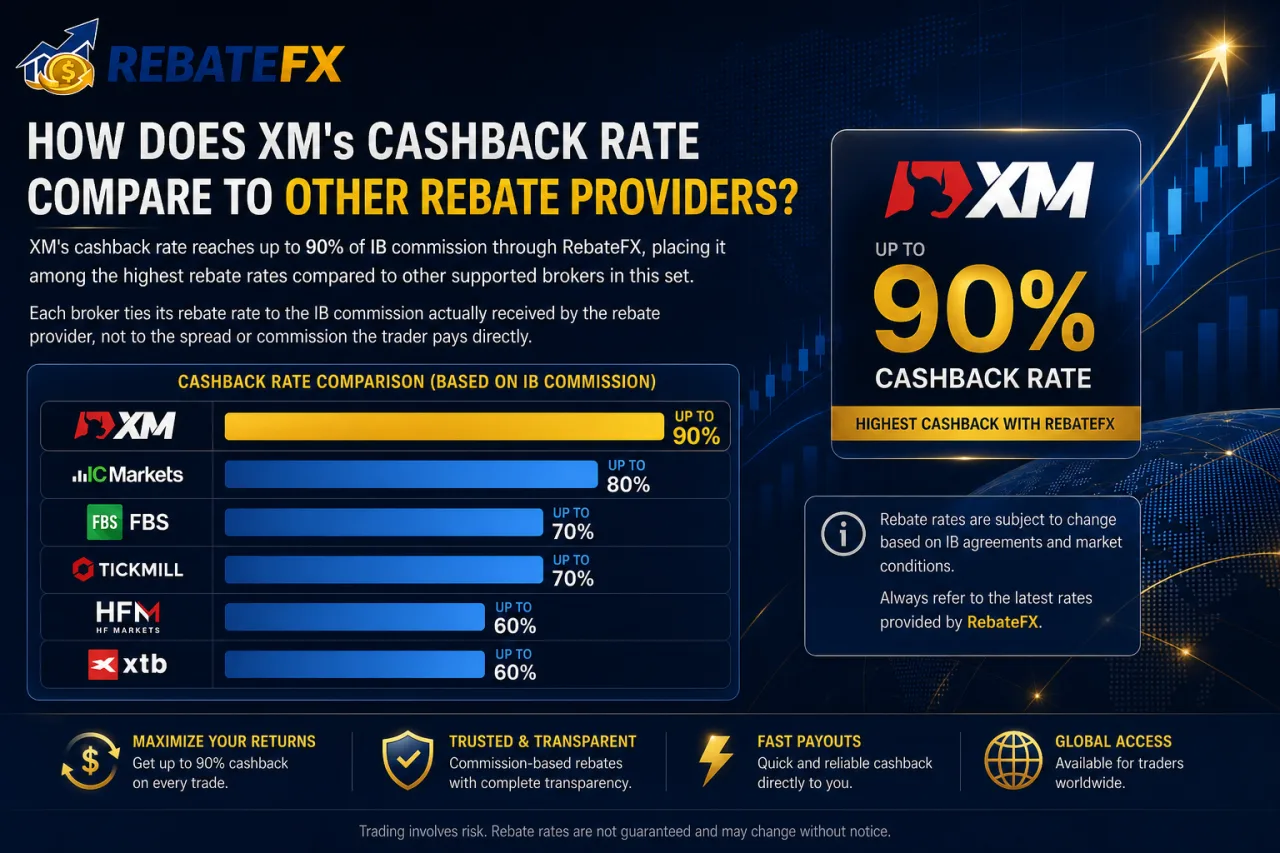
Up to 90% of IB commission is XM’s cashback rate through RebateFX, placing it among the highest rebate rates compared to other supported brokers in this set. This comparison addresses how XM’s cashback rate stacks up against IC Markets, FBS, Tickmill, HFM, and XTB.
Each broker ties its rebate rate to the IB commission actually received by the rebate provider, not to the spread or commission the trader pays directly. The rates below reflect that same commission-based structure across providers.
- XM offers up to 90% of IB commission back to the trader.
- FBS offers up to 90% of IB commission, matching XM’s upper range.
- IC Markets offers 80% of IB commission.
- Tickmill offers 80% of IB commission.
- HFM offers 80% of IB commission.
- XTB offers 80% of IB commission.
XM and FBS share the top position in this comparison, both reaching the 90% ceiling. IC Markets, Tickmill, HFM, and XTB cap at 80%. Actual rebate amounts still vary by account type, product traded, and trading volume even when the percentage rate stays the same across brokers.
How Is True Trading Cost Calculated When Using an XM Rebate?
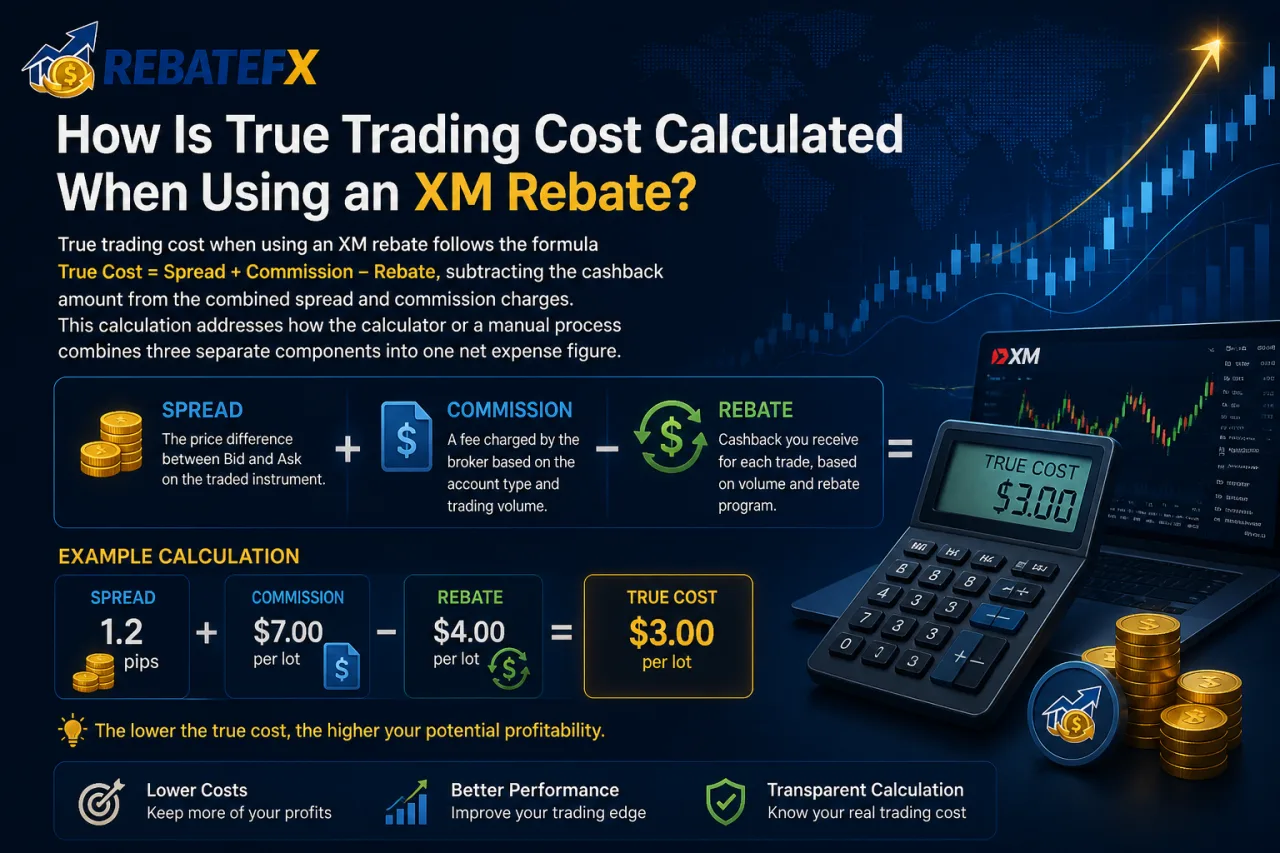
True trading cost when using an XM rebate follows the formula True Cost = Spread + Commission – Rebate, subtracting the cashback amount from the combined spread and commission charges. This calculation addresses how the calculator or a manual process combines three separate components into one net expense figure.
Spread cost forms the first component, representing the price difference between bid and ask on the traded instrument. Commission fee adds as the second component where the account type charges a per-lot or per-trade fee separate from spread. The rebate amount then subtracts as the third component, since this figure represents the cashback credited back from the IB commission share agreed with the rebate provider.
The calculator processes this by taking the total spread cost and commission fee paid on a closed trade, then deducting the rebate value computed from the IB commission formula covered earlier. The output shows net cost per lot rather than the raw spread or commission the trader sees on a trade confirmation. Manual calculation follows the same sequence: sum spread and commission first, then subtract the rebate credited for that specific volume and instrument.
This net figure differs across account types and instruments, since spread, commission, and rebate rate each shift depending on the product traded on XM.
How Are Rebate Amounts Calculated Per Lot for Different Instruments?
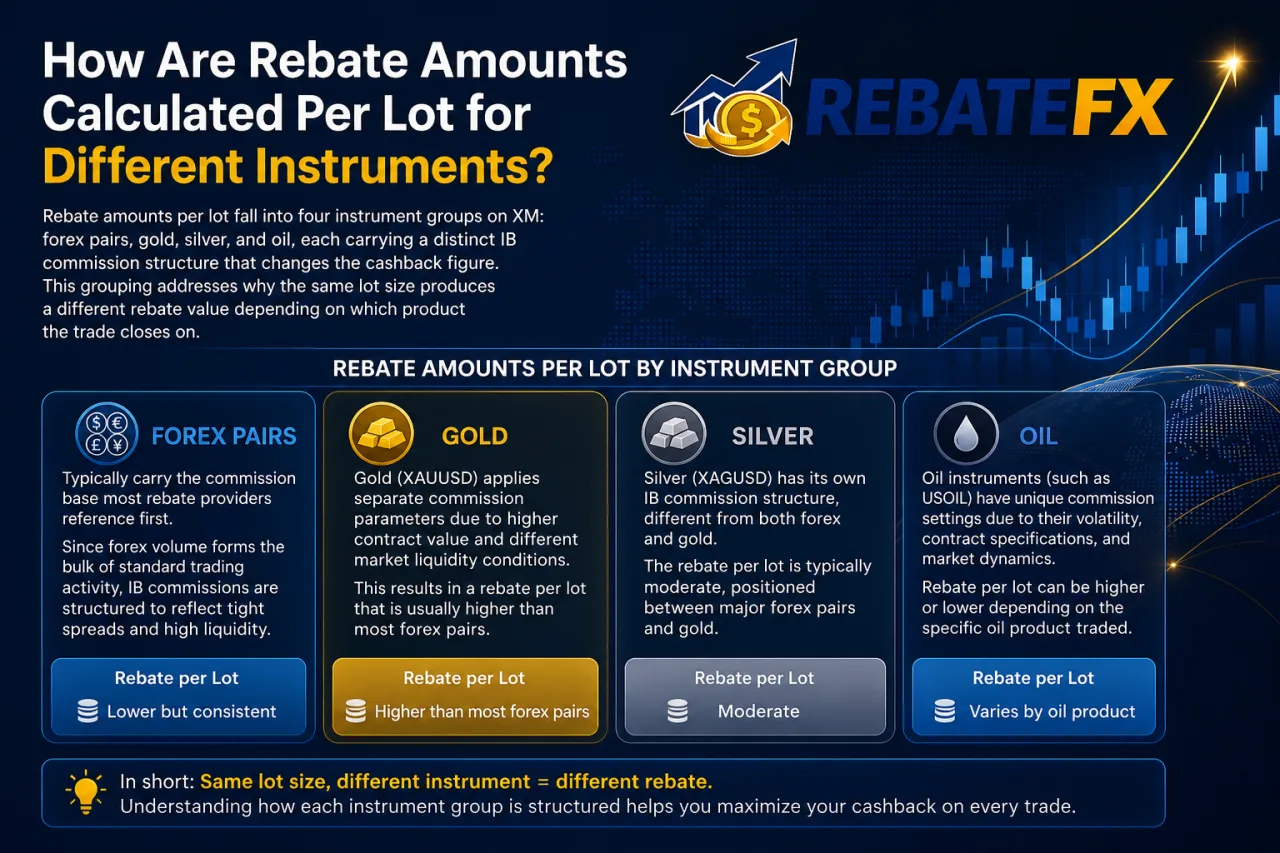
Rebate amounts per lot fall into four instrument groups on XM: forex pairs, gold, silver, and oil, each carrying a distinct IB commission structure that changes the cashback figure. This grouping addresses why the same lot size produces a different rebate value depending on which product the trade closes on.
Forex pairs typically carry the commission base most rebate providers reference first, since currency volume forms the bulk of standard trading activity. Gold and silver apply separate commission schedules tied to metals trading, which shifts the per-lot IB commission XM pays the rebate provider and, in turn, the rebate credited to the trader. Oil follows its own commission structure as an energy product, distinct from both forex and metals pricing.
Actual rebate amounts still depend on the specific product traded and the volume executed, since commission structures vary by instrument.
Traders holding positions across multiple instrument types calculate rebate per product separately rather than applying one blended rate, since mixing forex and metals volume into a single estimate produces an inaccurate total.
What Are Some Advanced Considerations When Using an XM Rebate Calculator?
Advanced considerations when using an XM rebate calculator group into three areas: account type variation in the commission base, trade eligibility rules, and gaps between estimated and actual credited rebates. Each factor pushes the calculator output away from a simple lot-times-rate estimate.
The main considerations include:
- Account type variation: The commission base used in the calculation differs depending on the account type, which changes the resulting rebate figure.
- Trade eligibility rules: Not every trade automatically qualifies for a rebate, and eligibility conditions affect which volumes actually count toward the payout.
- Estimate-vs-actual gap: The calculator output represents an estimate, and the actual credited rebate depends on factors that only appear after the trade settles.
The sections below break down how each consideration changes the final rebate figure.
Do All XM Account Types Qualify for the Same Rebate Calculation?
No, XM account types do not qualify for the same rebate calculation, since IB commission received per lot shifts across account structures. Standard, Micro, and Ultra Low accounts each carry different commission bases, which changes the rebate output even when the trader applies an identical rebate rate.
This variation matters for the eligibility question raised earlier, since account type sits alongside instrument and volume as a required input.
- Standard accounts tie IB commission to spread markup rather than a separate per-lot fee.
- Ultra Low accounts apply a reduced spread with a distinct commission structure.
- Zero accounts may carry a fixed commission per lot instead of spread-based revenue.
Exact eligibility and rebate rates per account type depend on verified data confirmed directly with the rebate provider rather than assumed uniformity across the account lineup. Traders holding multiple account types check each rebate rate separately before combining totals into one estimate.
What Trade Types May Be Excluded from Rebate Calculation?
Trade types excluded from rebate calculation typically fall into two groups: promotional or bonus-linked trades and non-standard volume trades that fall outside the broker’s qualifying criteria.
This question ties directly to the eligibility factor raised earlier, since not every closed trade on XM automatically feeds into the rebate formula. Promotional trades, such as those tied to a deposit bonus or a specific contest campaign, often carry separate commission handling that a rebate provider does not count toward the IB commission base. Non-standard volumes, including trades below a minimum lot threshold or positions closed within an unusually short holding period, may also fall outside standard rebate tracking.
Exact exclusion rules vary by broker and rebate provider, so no fixed list applies universally across every XM account or campaign.
Traders confirm current program terms directly with the rebate provider before assuming a trade qualifies, since eligibility criteria change across account types and promotional periods.
Conclusion
In conclusion, an XM rebate calculator helps traders estimate cashback accurately by applying the provider’s rebate rate to the IB commission generated from eligible closed trades. The final rebate depends on trading volume, account type, instrument, jurisdiction, and trade eligibility, while the true trading cost is calculated as spread plus commission minus the rebate received. Traders should enter each instrument separately, compare provider rates, and verify the estimated result against the actual cashback credited to their account.

Liam Dravon is a Forex Market Analyst at RebateFX.org, specializing in Forex rebate programs, Introducing Broker (IB) structures, broker analysis, and trading cost optimization. He manages English-language content for XM Rebate, FBS Rebate, and HFM Rebate, focusing on account registration, IB transfers, cashback calculations, and rebate verification to help international traders understand rebate conditions and manage trading expenses more effectively.